
Planning for the Unplanned

By Rev Dr Alex Abecina
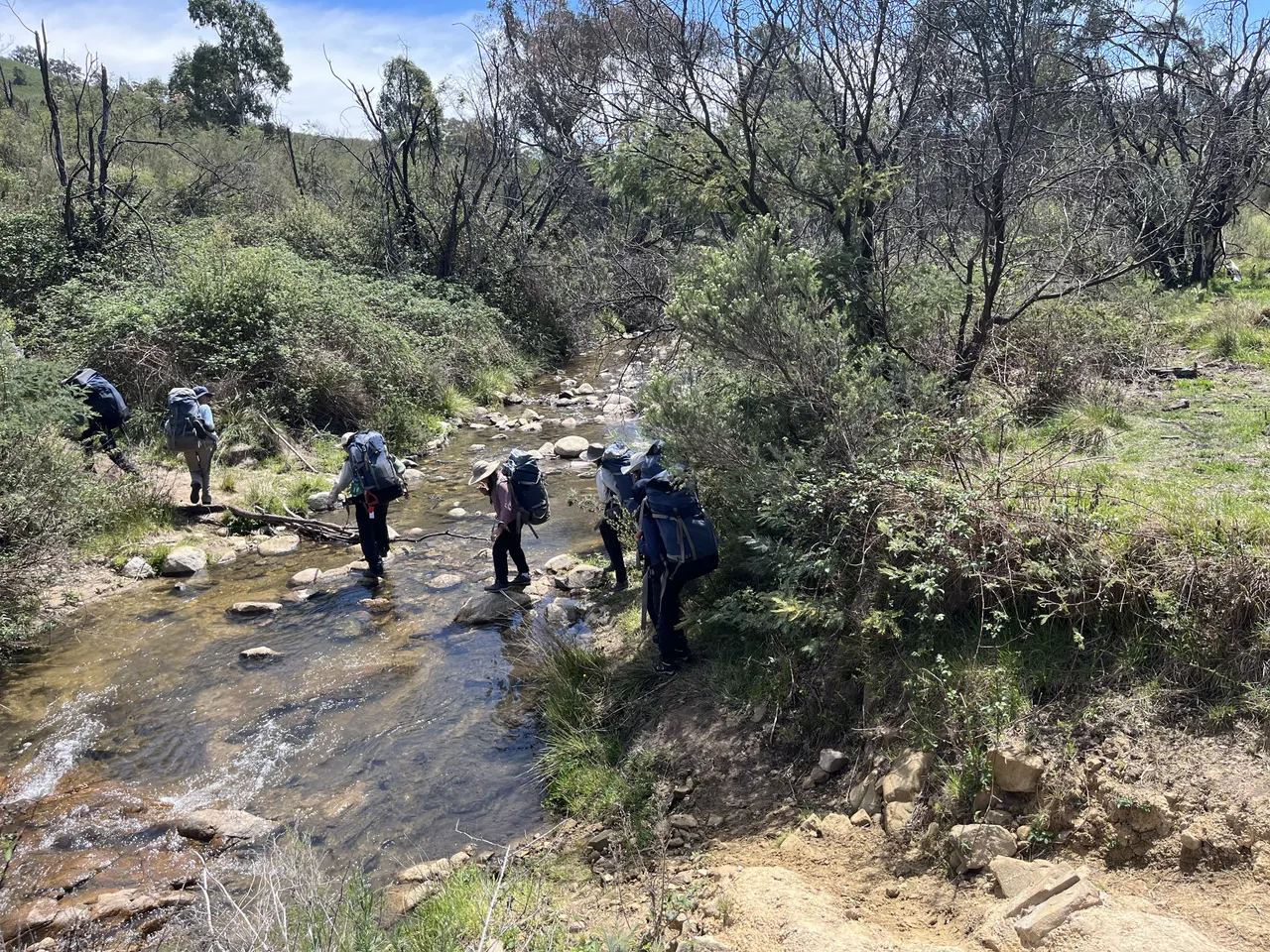
Careful preparation helps young people take responsibility and approach challenges with confidence. But some of life’s most valuable discoveries happen when things don’t go to plan. As Year 9 students prepare for wilderness camp, Rev Dr Alex Abecina reflects on making plans while remaining open to the unexpected.
As Year 9 students prepare for wilderness camp, Rev Dr Alex Abecina reflects on the value of careful planning and the unexpected experiences that can shape our learning, our choices and our future.
This term I will be heading off with our Year 9 students on a five-day wilderness camp. As their Chaplain, it is a joy to journey alongside them as they round off their year with a challenge aimed at their social, emotional and spiritual growth.
On camp we will need to cook our own meals, set up and sleep in bivvies, and navigate our way across unfamiliar terrain. If we are to have any chance of finishing in one piece, we will need plenty of advance planning.
That is why, weeks before they depart for their hike, students are already briefed by professional guides about what to expect: what outdoor equipment they may need to purchase and what risks to watch out for (like snake bites and sprained ankles). They are also given a detailed packing list that covers all of the essentials for survival.
Even during the hike itself, students convene nightly after dinner in their groups with their camp guide to debrief the day, reflecting on what went well and what didn’t, and discussing improvements they can make to their plans for the following day.
Like many of Burgmann’s outdoor learning experiences, the Year 9 camp is an invaluable opportunity for students to take mature responsibility for themselves through preparedness and organisation. As Boyes et al. (2019, p. 355) observed in their outdoor education study amongst a group of adolescents:
“solid preparation coupled with experience enabled anticipation of the evolution of a situation and effective master plans were devolved into micro-plans to guide specific decision options.”
Long after students return to school, the skills they acquire outdoors can be transferred to other real-world contexts that demand both long-term and short-term planning, situational monitoring and flexible execution of adaptive goal-setting.
Yet, while good and wise preparation is important, we know it is impossible to attain full control over our environment and the outcomes of our planning. Camping teaches us this, as unpredictable weather can force us to resort to Plan B, or even Plan C.
Sociologist Hartmut Rosa (2020, pp. 64ff) suggests that the tension between wanting to ‘take control’ through meticulous forward planning and simply ‘letting things happen’ is a basic conflict that impacts today’s students and their parents during the years of school education. Contrary to the increasing pressure for adolescents to have their whole lives fully and strategically mapped out before they finish Year 12, Rosa (2020, p. 68) comments:
“Education occurs not when a particular skill has been acquired, but when … a child or an adolescent suddenly realizes: Oh! History – or politics, or physics, or music – says something to me. It concerns me in some way, and I can engage with it self-efficaciously. When exactly this ‘spark’ occurs is effectively uncontrollable. Mostly it happens at unplanned, unexpected, often incidental moments …”
Rosa notes that career trajectory is, for many high school graduates, something that is outside of their control. It is very rare that a person ends up becoming what she or he planned to be in high school (Rosa, 2020, p. 71). That is certainly true of my experience! At Burgmann, students learn not only to cope with the uncontrollability of their ever-changing world, but to respond to a deeper ‘calling’ that draws them into a future beyond the limitations of their best-laid plans.
Burgmann’s Christian ethos is well suited to an education that navigates the tension of a life that is both well planned and unplanned. God declares the plans he has for Jeremiah’s safe, hopeful and prosperous future (Jer. 29:11). The Book of Proverbs instructs us to make wise plans by seeking the counsel of others (Prov. 15:22). Proverbs also observes how people make many plans, even as God guides their steps (Prov. 16:9). The Book of James advises that we should hold on lightly to our future plans, while remaining open to God’s will, for we ‘do not even know what will happen tomorrow’ (Jas. 4:13 to 15).
Passages like these remind the Burgmann school community that wisdom requires planning, yet our plans are nested within God’s larger plan. With that comes great hope and confidence to step into the future, and perhaps even into a bigger calling than we could have possibly imagined for ourselves.
References
Boyes, Mike, Tom Potter, Soren Andkjaer, & Martin Linder (2019). ‘The role of planning in outdoor adventure decision-making’. Journal of Adventure Education and Outdoor Learning, 10, 4. Pp. 343 to 357.
Rosa, Hartmut (2020). The Uncontrollability of the World. Polity.

A Co-educational Independent School located in Gungahlin, ACT.
We acknowledge the Ngunnawal peoples as the traditional keepers on the land on which we gather. We recognise and honour their wisdom and education traditions. We commit ourselves to actively working towards reconciliation, stepping forward with grace, commitment and wisdom on this journey.